
特别推荐
[AA插件捆绑包]Acustica Audio Plugins Bundle 2024.9+安装方法+双语说明书 [WiN, MacOSX](70GB+)
关联资源
[高精度硬件模拟多效果插件] Acustica Audio Nebula 4.5 v2.5.0 (External Libraries Only) [WiN, MacOSX]
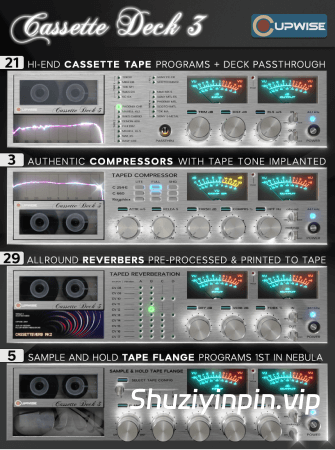
Team ARCADiA | 31 December 2025 | 1.67 GB
此音色库提供 44.1、48、88.2 和 96kHz 四种采样率(购买即可获得全部四种采样率)。它还包含带有按钮的皮肤,可用于在 N3 和 N4 的程序之间切换。
此版本实际上相当于四个不同类型的 Nebula 程序合集,外加一个额外效果。大多数效果都是使用 Marantz 4020 卡座制作的,该卡座配备三个磁头,可以双倍速录制/播放,从而提升性能(例如扩展高频范围)。不过,部分混响和压缩效果使用了 Tascam 122 mk3。
此版本的主要部分是“卡座 3”,其中包含磁带音调类型的程序,并延续了前两部分的内容。这里共有 21 个磁带音调程序,分别使用不同品牌和四种磁带类型(I、II、III 和 IV)制作而成。有时使用杜比降噪,有时不使用,在某些情况下,我甚至调整了内部磁带均衡器的微调电位器,以获得不同的效果,从而获得丰富的音色变化。这些设置可以带来极其丰富的磁带音色,如果输入电平控制得当,还能获得带有谐波的美妙饱和效果。
所有这些设置我都使用了双倍速模式,因此很多程序实际上提供了非常平坦的频率响应,几乎达到 20kHz。其中一些是我迄今为止制作的最平坦的磁带程序。在双倍速模式下,这台录音机的音质可能比市面上很多消费级开盘式录音机都要好,这一点在这些程序的音色中体现得淋漓尽致。我还特意录制了一些低保真效果,以防您想要更明显的磁带音色。
此外,还有一组“仅动态”程序,与主要的磁带音色程序相匹配。除了一个主磁带音色程序外,其他所有程序都有对应的匹配程序,这些匹配程序需要与主音色程序配合使用才能获得“完整效果”。这些匹配程序专注于重现从磁带采样得到的磁带压缩效果。它们本身是透明的,没有任何音色,因此需要与音色程序配合使用才能获得该方面的声音。这些程序使用起来相对简单。它们包含一个可调节的释放控制,但没有启动控制,因为它们的主要目的是简单地重现磁带压缩效果,这通常类似于一种限制器效果。
此外,还包含三个压缩器。这些压缩器是我将磁带采样与我之前发布的三个 Nebula 压缩器混合制作而成的。您可能熟悉我之前发布的 Casspressors,它也采用了类似的方法,但这次有所不同。之前的版本只使用了压缩器的起音/释放特性,而这次则连动态响应/压缩曲线也取自这些压缩器。最终成果是三个功能齐全的压缩器,它们的工作方式和特性几乎与各自版本完全相同,但音色和泛音则来自磁带/磁带录音机。Casspressors
更侧重于粗糙的低保真失真效果,而这些压缩器更像是我之前发布的压缩器(C660、C254-E 和 Rayphlex 柔和拐点压缩器)的替代版本,具有磁带更圆润、更平滑的特性以及标志性的(轻微的)高频滚降。多年来我一直想尝试这个想法,我对最终的成果非常满意。无论你是否拥有那些合辑版本,我相信你会发现这些另类版本非常独特且实用。
接下来是 CassetteVerb 2,它是我之前发布的 CassetteVerb 的延续。这次我又采用了不同的方法。我从我所有作品中提取了各种类型的混响,包括弹簧混响、板式混响、回声室混响,甚至还有我之前发布的电子管收音机混响以及 CassetteVerb 中的混响,并将它们“重新采样”到磁带上。
我使用了 Marantz 和 Tascam 两台录音机来重新采样所有 10 个源混响,其中一些混响我多次使用了 Tascam 录音机,利用其变速控制功能以不同的速度播放脉冲响应,从而调整混响的音调。这也是我多年来一直想尝试的想法!最终成果——我认为这 29 种风格迥异的混响比第一版 CassetteVerb 要好得多。这次的混响效果器更加实用,我特意加入了更多常见的混响元素,比如房间混响、板式混响、弹簧混响等等——都是比较简单的混响,但都带有不错的磁带音色。这些混响效果器确实为这张专辑增色不少,完全可以单独发行。
此外,我还添加了一个我称之为“采样保持磁带镶边器”的程序。它的工作方式与典型的镶边器不同,并非使用正弦波或三角波低频振荡器来调制延迟,而是以控制旋钮设定的速率随机跳转到不同的位置。你可以从6种不同的磁带音色中进行选择,从而获得不同的镶边效果。这个程序应该被视为一个“免费赠品”,因为你可能觉得它有用,也可能觉得没用,而且它也有一些缺陷(详见说明书)。对于某些人来说,它或许是一个有用的工具(例如用于声音设计等)。
我本来可以把这些内容分开发布,但我更喜欢把各种各样的东西打包在一起。这里的内容非常丰富,我想你需要花些时间才能真正掌握所有可用的功能。
最后但同样重要的是,这个库还附带了 Max Ponomaryov(又名 azzimov)制作的精美自定义皮肤!N3 和 N4 都有相应的皮肤。这些皮肤允许你通过按皮肤上的按钮来切换不同的程序。
这里还有一段 Max 制作的视频(他还在测试方面提供了大量帮助,非常感谢 Max!),展示了本次发布的所有不同类型效果以及他制作的精美皮肤。请注意,这段视频没有展示“仅动态”程序,因为这些程序是在最初发布几年后作为更新添加的。
This library is available in 44.1, 48, 88.2, and 96khz sample rates (you get all 4 sample rates when purchasing). It also includes skins with buttons you can use to switch between the programs, for both N3 and N4.
This release is really like a bundle of 4 collections of different types of Nebula programs, plus a bonus effect. Most of these effects were made using a Marantz 4020 cassette deck, which has 3 heads and can record/play at double speed, giving increased performance (extended high freq range is one example), however some of the reverbs and one of the comps used the Tascam 122 mk3.
There is the main ‘Cassette Deck 3’ portion of this release, which includes the tape tone type programs, and continues from parts 1 and 2. 21 tape tone programs are here, made from that many different tapes of various brands, and all four tape types- I, II, III, and IV. Sometime dolby NR was used, other times not, and in some cases I even messed with the internal tape EQ trimpots to get different results to get a lot of variety. These can give you a huge variety of tape tone, and if you drive the input level just right you can get a nice saturation effect, with harmonics.
I used double speed mode for all of these, so there are many programs which actually provide a very flat response almost up to 20khz. Some of these are the flattest cassette programs I’ve put out yet. In double speed mode the deck probably sounds better than a lot of consumer grade reel decks out there, and that comes across in the sound in these programs. I made sure to get some more lo-fi results too in case you want a more obvious cassette sound.
Then there is a set of ‘dynamics only’ programs, which match the main tape tone ones. There is a matching program for all but one of the main tape tone programs, and these programs need to be paired with the main tone programs to get the ‘full effect’. These programs focus only on reproducing the tape compression that was sampled from the tapes. They are otherwise transparent, with no tone of their own, which is why you need to pair them with a tone program to get that aspect of the sound. These programs are relatively simple to use. They do include an adjustable release control, but no attack, because the main focus is to simply recreate the tape compression which is usually like a limiting type effect.
There are three compressors also included. I made these by hybridizing tape samples with three of my released Nebula compressors. You may be familiar with my previous Casspressors release, which also did that, but this time is different. In that release only the attack/release behavior was taken from the comps, but here the dynamic response/compression curve is also taken from the compressors. The end result is three full-fledged compressors which work and behave almost exactly like the versions from their respective releases, but the tone and harmonics come from the tapes/tape decks.
Casspressors was really more about junky lo-fi distortion effects but these are more like alternate versions of my comps I based them off of (the C660, C254-E, and Rayphlex softer knee comp), with the rounder, smoother character of cassette tape and the characteristic (slight) high freq roll-off. I’ve been wanting to try this idea out for years and I’m really happy with how it came out. Whether you have those comp releases or not, I think you’ll find these alt versions very unique, and useful.
The next portion is CassetteVerb 2, a continuation of my previous CassetteVerb release. Again, I did things differently this time. Here I took reverbs from across my entire release output, of various types, including- springs, plates, echo chambers, and even my tube radio reverbs and the previous CassetteVerb release, and ‘re-sampled’ them onto and off of cassette.
I used both the Marantz and Tascam decks to resample all 10 source reverbs, and for some of them I used the Tascam multiple times, using its varispeed control to play back the impulses at faster or slower speeds, pitching the reverbs up or down. This is also an idea I’ve really wanted to try for years! The end result- I think these 29 very different reverbs you have to choose from are much better than the first CassetteVerb release. Much more useful, and this time I made sure to have more typical things like room sounds, plates, springs- just simpler reverbs but with a nice tape tone added. These reverbs really add a lot of value to this release and could stand as their own release easily.
As a bonus, there is what I call a Sample and Hold Cassette Tape Flanger program. It doesn’t work like typical flangers, with a sine or triangle LFO waveform modulating the delay, but instead it jumps to random positions at a rate determined by the controls. There are 6 different tape tones you can select from, to get different sounding flange results. This really needs to be thought of as a ‘free bonus’ thrown in, because you may or may not find it useful, and it has some flaws (outlined in the manual). For a few out there it may be a useful tool (sound design, etc).
I could have released this stuff separately but I liked the idea of having a big treasure trove of different things in one package. There’s enough to digest here that I think it will take you quite a while to really come to grips with what’s available.
Last but not least, this library comes with excellent custom skins by Max Ponomaryov, aka azzimov! There are skins for both N3 and N4. The skins allow you to switch between the different programs by pushing buttons on the skin.
Here’s a video also by Max (who also helped hugely with testing, thanks Max!), showing off all the different types of effects in this release, as well as his great skins. Note that this video doesn’t show the ‘dynamics only’ programs, because those were added in as an update, years after the original release.
![[30套好莱坞完整电影级空灵音乐集] Hollywood Audio Design DREAMSCAPE [KONTAKT, WAV]](https://www.shuziyinpin.vip/wp-content/uploads/2026/10/hollywood-audio-design-dreamscape.png)
![[史诗氛围音源] Sonuscore Epic Atmospheres Expansion Pack [KONTAKT]](https://www.shuziyinpin.vip/wp-content/uploads/2026/10/sonuscore-epic-atmospheres-expansion-pack.png)
![[狂野鼓组音源] Heavyocity Oblivion Drums [KONTAKT]](https://www.shuziyinpin.vip/wp-content/uploads/2026/10/heavyocity-oblivion-drums.jpg)
![[古典单簧管乐器音源] Embertone Herring Clarinet [KONTAKT]](https://www.shuziyinpin.vip/wp-content/uploads/2026/10/embertone-herring-clarinet.png)
![[影视交响乐音源] Heavyocity Symphonic Destruction Redux [KONTAKT]](https://www.shuziyinpin.vip/wp-content/uploads/2026/09/Symphonic-Destruction-Redux.png)
![[太空时代管弦乐团音源] Authentic Soundware Space Age Strings [KONTAKT]](https://www.shuziyinpin.vip/wp-content/uploads/2026/09/Space-Age-Strings.png)

评论0