
FANTASTiC | 27 June 2026 | 2.71 GB
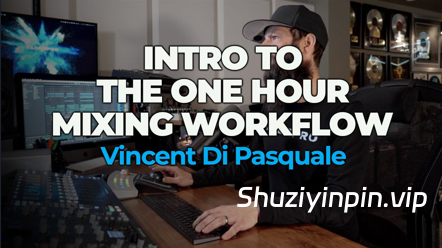
跟随 FaderPro 联合创始人、资深音乐人 Vincent Di Pasquale,不到一小时即可学会混音。
本课程结束时,您将能够把任何曲目打磨成完美的最终混音,随时可以演出或投稿给唱片公司。
这门混音和母带处理课程将为您清晰地呈现从零散的歌曲创作到最终成品的全过程。Vincent 注重直觉和效率,并将其融入到曲目制作中。探索他专业的混音和母带处理方法,确保您的作品拥有行业标准的音质,兼具冲击力和清晰度。
Vincent Di Pasquale 创立 FaderPro,旨在分享他作为制作人、工程师和混音师 20 余年的音乐制作经验。他曾与 Madonna、Justin Timberlake 和 Mariah Carey 等巨星合作,拥有丰富的专业知识,确保您的混音作品在最盛大的舞台上熠熠生辉。 2009年,他以Rebirth的名义发布了麦当娜和贾斯汀·汀布莱克的《4 Minutes》的混音版,并登上了Billboard热门舞曲/俱乐部播放榜的榜首。
在两个小时的课程内容中,VDP展示了他非技术性的一小时混音和母带处理方法。你将学习如何构建扎实的底鼓和贝斯基础,从项目的底部向上推进,凭直觉平衡和塑造音色,并利用AI辅助构建一条极具竞争力的母带处理链。
Vincent 详细讲解了他的制作流程,强调了软件内操作的高效性。他从Ableton的歌曲创作环节无缝过渡到精简的混音流程,使用Ableton自带的插件和他常用的第三方插件。
他利用Ozone的母带处理助手,获得构建特定曲目母带处理链的建议,并在决定是否采纳之前,巧妙地对比这些建议。
在18个内容丰富的章节中,他快速讲解了混音流程,重点在于保留动态余量并迅速实现混音中的最佳平衡。
Vincent 的策略是循环播放歌曲中最响亮的部分,确保歌曲高潮达到最大冲击力。通过围绕这一关键片段的自动音量调整,他保持推子位置不变,一旦达到理想的平衡,就无需反复微调。
因此,如果您想要一个万无一失的工作流程,在一小时内完成最终的精修混音,VDP将为您指明方向!
主总线链顺序:
在本视频片段中,Vincent向我们展示了他推荐的主总线插件顺序。
使用“The Oven”扩展立体声宽度:
Vincent快速演示了“The Oven”,这是他用于主总线立体声扩展的常用VST插件。
监听真实峰值
:在本视频片段中,Vincent解释了什么是“真实峰值”,以及如何通过考虑它来优化混音。
第一章:揭秘一小时工作流程
Vincent 带来了他的一小时混音工作流程课程,强调了快速决策对于专业混音和母带处理的重要性。
第二章:聚焦高潮部分
Vincent 秉持着他富有创意却又略显混乱的创作方式,首先循环播放歌曲中最响亮的部分,以此作为混音的起点。
第三章:创建主总线
链 Vincent 循环播放高潮部分,运用主总线增益控制,并通过电平表来保持项目主通道的充足动态余量。
第四章:绘制主总线图
Vincent 构建了一个初始的主总线链,其中包含模拟磁带模拟、粘合压缩和立体声宽度增强。
第五章:参考音调平衡
通过目测电平表来调整音调平衡,并将大致电平与特定风格的预设进行比较,以确保混音处于合适的范围内。
第六章:从低音开始
Vincent 从混音开始,首先清理底鼓和贝斯之间的掩蔽效应,通过目测频率并使用侧链技术。
第七章:处理主底鼓
Vincent 通过削减敲击频率、提升高频并应用陡峭的高通滤波器来去除低频浑浊,从而优化底鼓。
第八章:混音高音底鼓
Vincent 雕琢高音底鼓,这是渐强部分中经过高通滤波的打击乐元素,旨在增强主底鼓在响亮段落中的高频冲击力。
第九章:平衡鼓组
Vincent 逐步取消静音,优化拍手和踩镲的平衡,并使用均衡器降低刺耳感和压缩感,以增强冲击力。
第十章:在密集的鼓组中保持空间
感Vincent 取消循环打击乐的静音,使用陡峭的高通滤波器来保持底鼓和贝斯之间的关系,并创造低频空间。
第十一章:继续平衡
Vincent 继续取消静音,有条不紊地重新平衡,并选择合适的鼓填充来保持其在混音中的预期响度。
第十二章:人声混音
Vincent 重新引入人声部分,调整音量,应用压缩,并使用自带插件打造专业的人声处理链。
第十三章:塑造和声与效果
内容 Vincent 通过调整最响亮部分的平衡,优化和弦与效果元素的平衡,进一步雕琢掩蔽频率。
第十四章:参考进度
Vincent 参考粗混版本,确认清晰度提升,并与商业发行版本进行 AB 对比,找出任何缺失之处。
第十五章:按时间顺序调整元素
Vincent 从头开始,处理突出的元素,使用音量自动化来保持混音中最响亮部分的平衡。
第十六章:动态自动化
Vincent 继续使用动态音量控制自动混音,并通过对前一部分进行高通滤波来增强低音部分的冲击力。
第 17 章:制作热门母带
Vincent 利用 Ozone 11 的 AI 母带处理功能,精心挑选其推荐模块,并通过参考真实峰值电平表手动调整音量。
第 18 章:制作流媒体母带
Vincent 展示了如何修改 Ozone 以创建符合当今流媒体平台响度标准化要求的流媒体母带。
Learn how to mix in under an hour with Vincent Di Pasquale, FaderPro co-founder and star-studded music industry veteran.
By the end of this course, you’ll be able to take any track to a polished final mix ready to play out or shop to labels.
This mixing and mastering course provides a clear path from scattered songwriting to polished tracks. Vincent prioritizes intuition and efficiency in his track completion methods. Discover his approach and techniques for professional mix and masters, ensuring industry-standard sound with impact and clarity.
Vincent Di Pasquale co-founded FaderPro to share his music production insights after a 20+ year career as a producer, engineer, and remixer. Collaborating with icons like Madonna, Justin Timberlake, and Mariah Carey, he possesses the expertise to ensure your mixes shine on the grandest stages. As Rebirth, he released a remix of Madonna and Justin Timberlake’s 4 Minutes in 2009, reaching the top spot on Billboard’s Hot Dance/Club Play chart.
Throughout the two hours of course content, VDP demonstrates his non-technical, one-hour mixing and mastering approach. You’ll learn to build solid kick and bass foundations, work from the bottom to the top of the project, balance and tonally shape instinctively, and utilize AI assistance to construct a competitive master chain.
Vincent lays out his production process, emphasizing the efficiency of an in-the-box approach. Seamlessly transitioning from an Ableton songwriting session, he adopts a streamlined mixing approach, utilizing stock Ableton and his go-to third party plugins.
Embracing Ozone’s Mastering Assistant, he receives recommendations for structuring the track-specific mastering chain, tastefully AB’ing the suggestions before deciding whether to implement them.
In 18 jam-packed chapters, he moves fast through his mixing process, with a keen emphasis on preserving headroom and quickly achieving optimal balance in the mix.
Vincent’s strategic approach involves looping the loudest section, ensuring maximum impact at the song’s climax. Through automated volume adjustments centered around this pivotal segment, he preserves fader positions, eliminating the need for constant tweaking once the desired balance is achieved.
So, if you want a foolproof workflow to take your tracks to a final polished mix in under an hour, VDP is here to show you the way!
Master Bus Chain Order
In this clip, Vincent shows us his recommended order flow for plugins on his master bus.
Using “The Oven” For Stereo Width
Vincent gives a quick demo of “The Oven,” his go-to vst for stereo widening on the master bus.
Monitoring True Peak
In this clip, Vincent explains what “True Peak” is and how to optimize a mix by taking it into consideration.
Chapter 1: Unveiling the one-hour workflow
Vincent presents his one-hour mix workflow course, emphasizing the importance of fast decision making for a pro mix and master.
Chapter 2: Focusing on the drop
Vincent embraces his creative yet chaotic writing process, initiating his mixing by looping solely on the loudest section of the track.
Chapter 3: Creating a Master Chain
Looping the drop, Vincent employs master bus gain staging, utilizing metering to maintain ample headroom in the project’s master channel.
Chapter 4: Sketching a Master Bus Strip
Vincent assembles an initial master bus chain, incorporating analog tape emulation, glue compression, and stereo width enhancement.
Chapter 5: Referencing Tonal Balance
Visually metering the tonal balance, rough levels are compared to a genre-specific preset to ensure the mix sits in the right ballpark.
Chapter 6: Starting from the bottom
Beginning the mixing process, Vincent cleans up masking between the kick and bass, visually metering frequencies and employing sidechaining.
Chapter 7: Processing Main Kick
Vincent refines the kick by cutting knocky frequencies, boosts highs and applies a steep high-pass filter to remove sub-frequency muddiness.
Chapter 8: Mixing the Top Kick
Vincent sculpts the top kick, a high-passed percussive element in the build, for added high-end snap to the main kick in louder sections.
Chapter 9: Balancing the Drums
Gradually unmuting elements, Vincent refines the clap and hi-hat balance and employs EQ to reduce harshness and compression for added punch.
Chapter 10: Maintaining Space in Dense Drums
Unmuting the loop-based percussion, Vincent employs steep high-passing to preserve the kick-bass relationship and create low-end space.
Chapter 11: Continuing the Balance
Vincent continues to unmute elements, methodically rebalances and opts for drum fills to retain their intended loudness in the mix.
Chapter 12: Mixing the Vocals
Vincent reintroduces vocals, addresses levels, applies compression and achieves a pro vocal chain using stock plugins.
Chapter 13: Shaping Harmony and FX
Content with the loudest section’s balance, Vincent refines the balance on chordal and FX elements, further sculpting masking frequencies.
Chapter 14: Referencing Progress
Vincent references the rough mix for confirmation of increased clarity and ABs against commercial releases, pinpointing anything missing.
Chapter 15: Adjusting Elements Chronologically
Starting from the beginning, Vincent addresses standout elements, using volume automation to keep the balance in the mix’s loudest section.
Chapter 16: Automating Dynamics
Vincent continues to automate the mix with dynamic volume movement and enhances the drop’s impact by high-passing the preceding section.
Chapter 17: Making a Hot Master
Vincent leverages Ozone 11’s AI mastering, hand-picks its suggested modules and manually adjusts levels by referencing true peak metering.
Chapter 18: Making A Streaming Master
Vincent shows how to modify Ozone to create a streaming master that will comply with loudness normalization on today’s streaming platforms.
![[顶尖 R&B 采样综合素材包] Lucid RnB Alchemy [WAV, MiDi, TUTORiAL]](https://www.shuziyinpin.vip/wp-content/uploads/2026/09/Lucid-RnB-Alchemy.png)
![[MOTU Digital Performer 12 官方演示工程] MOTU Digital Performer 12 Demo Project [WiN]](https://www.shuziyinpin.vip/wp-content/uploads/2026/09/motu-digital-performer-12.jpeg)
![[ 音频工程入门教程:录音、混音和音乐制作] Udemy Audio Engineering For Beginners Record, Mix And Produce Music [TUTORiAL]](https://www.shuziyinpin.vip/wp-content/uploads/2026/09/Audio-Engineering-for-Beginners.png)
![[如何从零开始弹奏电吉他] Tus Clases De Guitarra Cómo Tocar Guitarra Eléctrica Desde Cero [TUTORiAL]](https://www.shuziyinpin.vip/wp-content/uploads/2026/09/Como-tocar-guitarra-electrica-desde-cero.png)
![[DIY音频大师班 完整扬声器设计教程] Udemy Diy Audio Masterclass Complete Loudspeaker Design [TUTORiAL]](https://www.shuziyinpin.vip/wp-content/uploads/2026/08/Udemy-Diy-Audio-Masterclass-Complete-Loudspeaker-Design.png)
![[暗黑陷阱音乐学习电子书] Red Bow Music Learn Dark Trap v2.3 WAV MiDi FL STUDiO PDF-FANTASTiC(309MB)](https://www.shuziyinpin.vip/wp-content/uploads/2026/08/Red-Bow-Music-Learn-Dark-Trap.png)

评论0