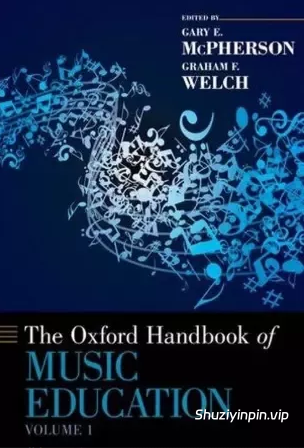
English | 2012 | 987 Pages | ISBN: 0199730814 | PDF | 20 MB
音乐教育发生在各种场合,既有正规的,也有非正式的。无论是在学校或音乐工作室,与朋友或家人一起演奏音乐,还是在乘车旅行、逛商场或看电视时,我们从生命最初的几个月就开始积累各种各样的声音体验,从而培养我们理解所处声音世界的能力。
《牛津音乐教育手册》全面概述了音乐体验、行为和发展在各种不同场合下的方方面面。本书共两卷,第一卷汇集了来自世界各地的撰稿人,探讨了与音乐学习和教学相关的一系列关键问题和概念。本书重点关注儿童时期(从婴儿期到青春期,尤其是在学龄期)的音乐学习和教学过程。这些章节探讨了世界各地的儿童如何学习和创作音乐,以及他们在学习和创作过程中获得的技能和特质,并研究了音乐教育者如何才能更好地满足青少年的音乐需求。本书的第二卷将探讨范围扩展到课堂之外,延伸到儿童的成年生活。无论单独使用还是配合使用,《牛津音乐教育手册》这两卷书都更新并重新定义了这门学科,并展示了世界各地的人们如何学习、享受和分享音乐的力量和独特性。
Music education takes place in many contexts, both formal and informal. Be it in a school or music studio, while making music with friends or family, or even while travelling in a car, walking through a shopping mall or watching television, our myriad sonic experiences accumulate from the earliest months of life to foster our facility for making sense of the sound worlds in which we live.
The Oxford Handbook of Music Education offers a comprehensive overview of the many facets of musical experience, behavior and development in relation to this diverse variety of contexts. In this first of two volumes, an international list of contributors discuss a range of key issues and concepts associated with music learning and teaching. The volume then focuses on these processes as they take place during childhood, from infancy through adolescence and primarily in the school-age years. Exploring how children across the globe learn and make music and the skills and attributes gained when they do so, these chapters examine the means through which music educators can best meet young people’s musical needs. The second volume of the set brings the exploration beyond the classroom and into later life. Whether they are used individually or in tandem, the two volumes of The Oxford Handbook of Music Education update and redefine the discipline, and show how individuals across the world learn, enjoy and share the power and uniqueness of music.
![[现代音频母带处理教程] Udemy Modern Audio Mastering [TUTORiAL]](https://www.shuziyinpin.vip/wp-content/uploads/2026/10/Udemy-Modern-Audio-Mastering.png)
![[音乐理论1-5级] Music Matters Music Theory Grades 1 To 5 [TUTORiAL]](https://www.shuziyinpin.vip/wp-content/uploads/2026/09/Music-Theory-Grades-1-To-5.png)
![[顶尖 R&B 采样综合素材包] Lucid RnB Alchemy [WAV, MiDi, TUTORiAL]](https://www.shuziyinpin.vip/wp-content/uploads/2026/09/Lucid-RnB-Alchemy.png)
![[MOTU Digital Performer 12 官方演示工程] MOTU Digital Performer 12 Demo Project [WiN]](https://www.shuziyinpin.vip/wp-content/uploads/2026/09/motu-digital-performer-12.jpeg)
![[ 音频工程入门教程:录音、混音和音乐制作] Udemy Audio Engineering For Beginners Record, Mix And Produce Music [TUTORiAL]](https://www.shuziyinpin.vip/wp-content/uploads/2026/09/Audio-Engineering-for-Beginners.png)
![[如何从零开始弹奏电吉他] Tus Clases De Guitarra Cómo Tocar Guitarra Eléctrica Desde Cero [TUTORiAL]](https://www.shuziyinpin.vip/wp-content/uploads/2026/09/Como-tocar-guitarra-electrica-desde-cero.png)